Cape to Cape Weekend was a 3 day weekend organized for past and present exchange teachers in the Margaret River area. We had a chance to hike the trials, sample the local wineries, see wildlife and sea life, check out the tourist attractions, explore a cave and swim at a beach. The Cape to Cape Track starts from the northwest point at Cape Naturaliste and runs 135 km along spectacular surf beaches, coastline and forests to the Southwest corner of Australia at Cape Leeuwin. Both areas have a tall working lighthouse as a historical landmark. Obviously, you can't do it all in 3 days, but they selected a few sections to walk.
The family only went a little ways from the Red Gate Beach parking lot. Collin and other exchange teachers continued 12.5 km over sandy beach, dunes, a iron walk bridge, a tough 300+ foot elevation hill climb and trail walk through bushland. The view from the top of the hill was grand, but seeing the finish line and the surfers at the Margaret River mouth was more rewarding.
Becky and the kids went to Amaze'n Margaret River with a large hedge maze, plus all sorts of ground puzzles and foot mazes to try to solve. Collin hiked for 3 1/2 hours, while the Becky and the boys played for the same length of time at the mazes. Check out the website -
http://www.amazenmargaretriver.com.au/
Once, we figure out how to get the pictures off the mobile phone, we'll post some.
The afternoon was spent a Giant's Cave. Margaret River area has dozens, if not hundreds of limestone caves in the area. Only a few are open to the public and we selected one the best. Giant's Cave is managed by the Dept. of Environment and Conservation so they have kept it more natural. There are no lights, except for a supplied torch (flashlight), along the self guided route. We scrambbled over rocks, had a few tight squeezes, and climbed many stairs and some ladders and ropes.


Above is the crew before the big descent and the photo of the weekend... Becky squeezing through a tight turn. Below are two unique cave formations - one going up stalagmite and one going down stalactite.
Collin holding the rope down the bottom slope and Becky and the boys at the top. We had so much fun 'down under', that we would highly recommend anyone visiting Margaret River to take the plunge.
Augusta is at the most southwestern point of Australia. It is where the two oceans meet - the Indian
and the Southern. At the point is a limestone lighthouse and waterwheel from the 19th century. Amazing views, but busy with tourists.
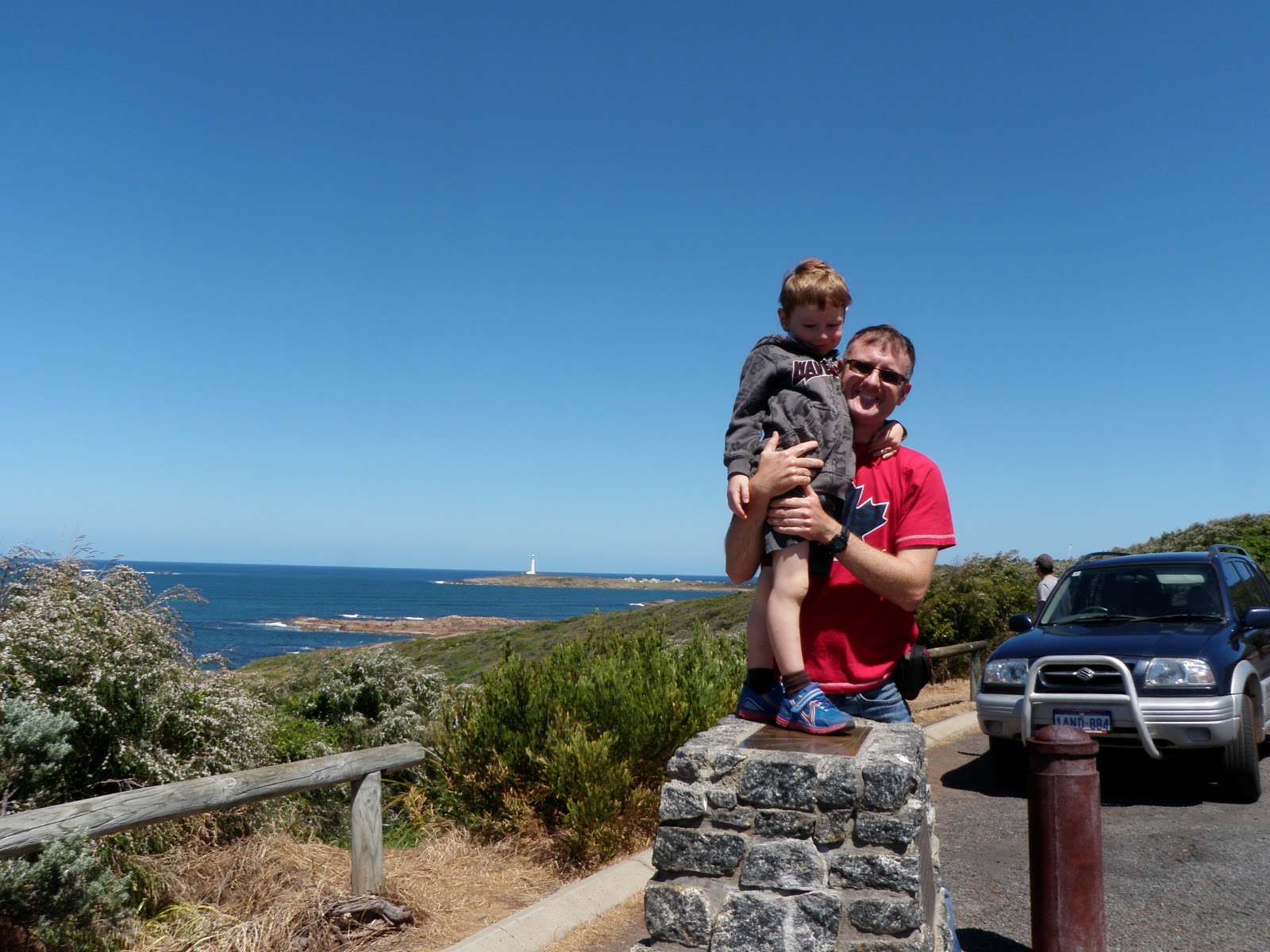
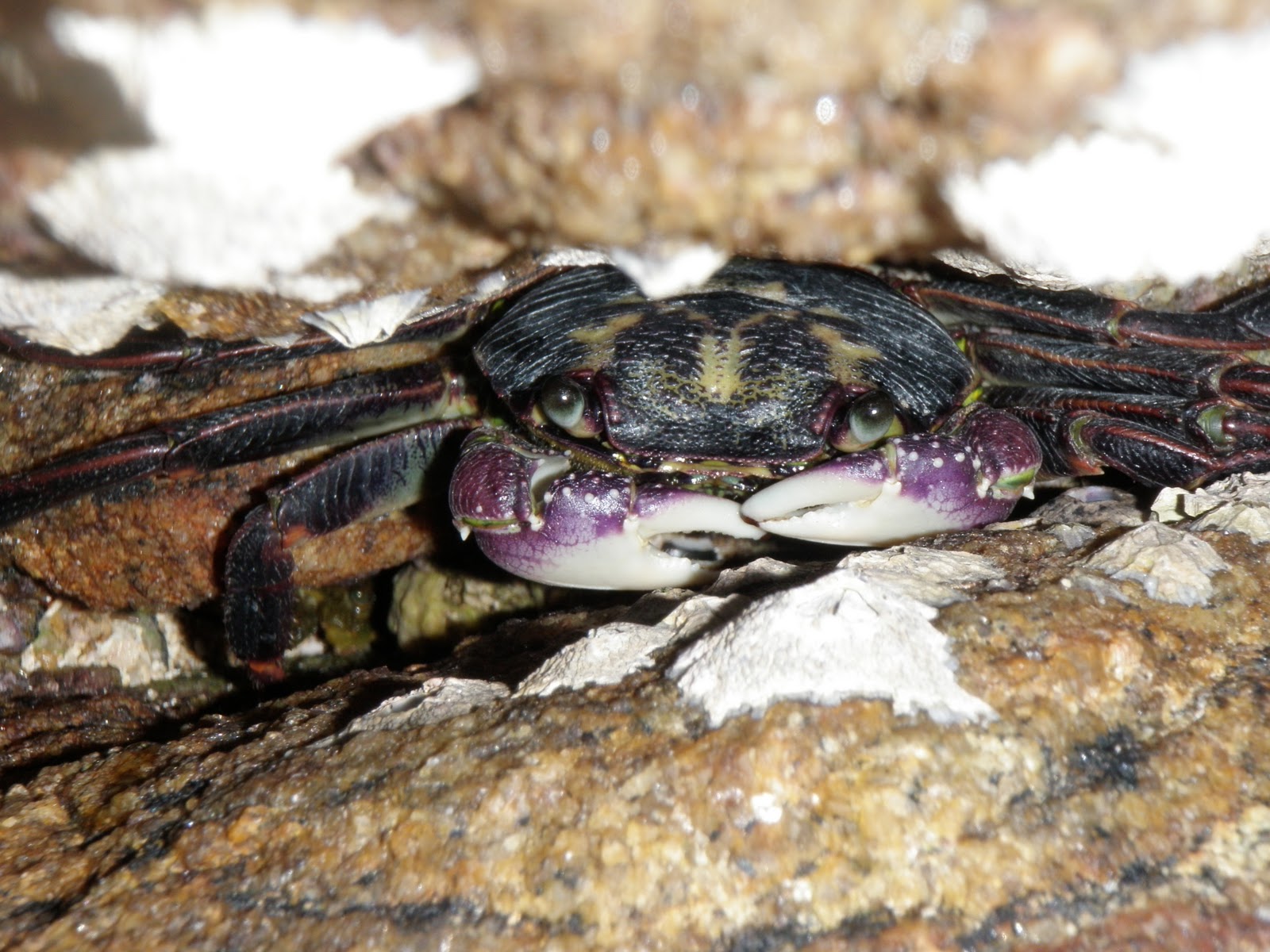
In the background is the lighthouse and the far side to the west is the Indian Ocean. To the left is the Southern Ocean. Next stop... Antarctica, some 5000 km away. We had fun investigating the rock pools as the tides were changing. Caleb spotted a blue manna crab hiding in the rocks and Jackson pointed out a sea anemone.
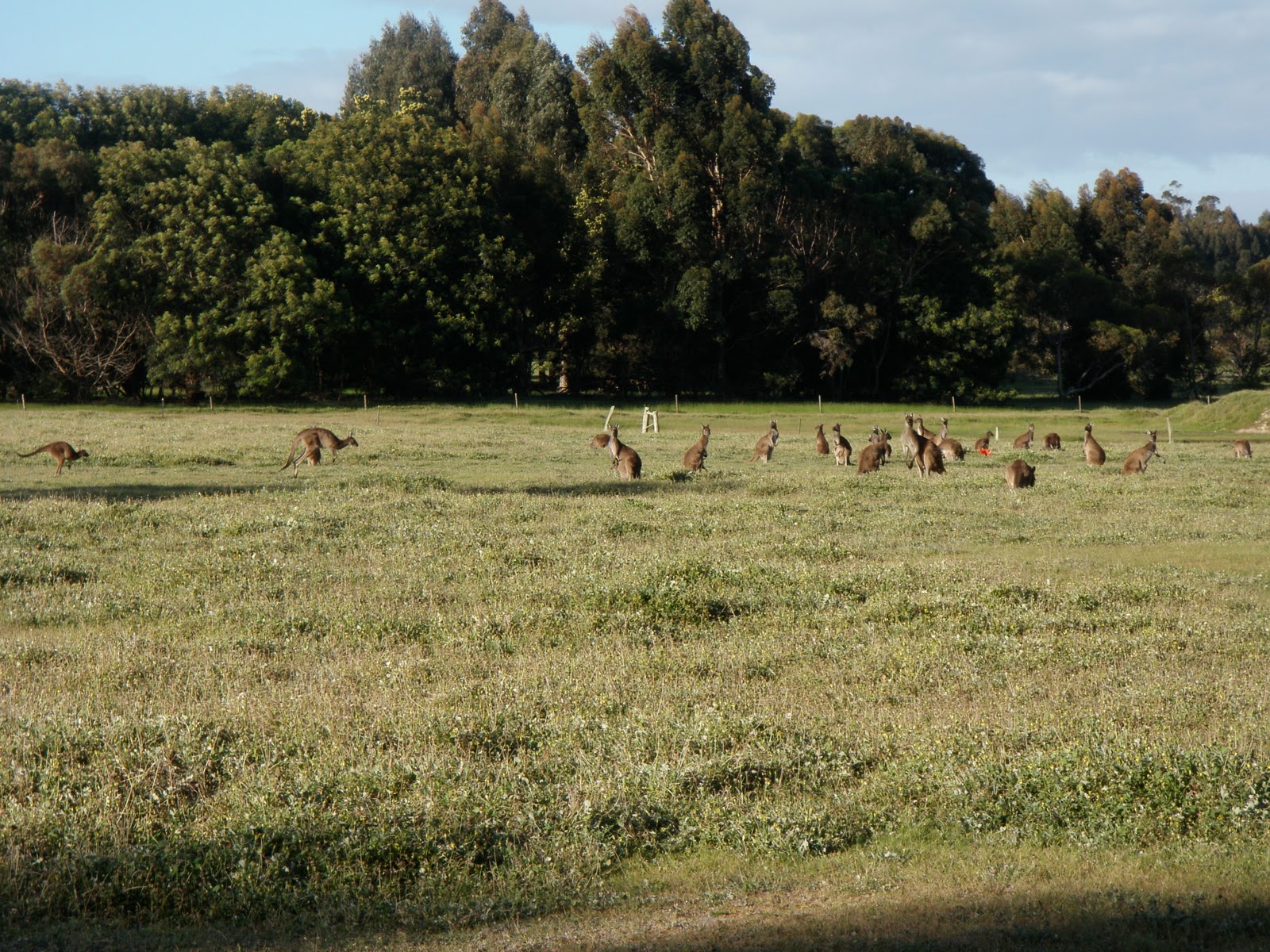
The place where all the exchange teachers stayed was in the country. We had a mob of 32 kangaroos (not counting joeys) visit every morning and evening, fairy blue wrens twitter around the garden and possums run up and down the roof all night. Wildlife is something we never tire of.
On the way home we stopped at the Cape Naturaliste Lighthouse. We walked the whale lookout path, but took a wrong turn and ended walking a lot further than intended. Collin ran ahead to a lookout over Bunker Bay and saw some some seals playing and fishing near a rocky outcrop. He also found the whale lookout and witnessed one humpback breaching as it traveled out to sea. The last stop of the day was a Dunsborough beach for a swim in the calm waters.


 Above, Caleb is running with one end of the hose whilst one of his teammates is attaching the other end of the hose to the pump; waiting for the signal to turn it on. Caleb and another teammate linked the two hoses together, but not tight enough. It broke and water exploded everywhere! Caleb took a face full of water, splashing the judges and nearby spectators as well. Most of the pee-wees aren't happy until they are wet 'soaked to the bone' happy.